
Alcaraz vs. Shelton: Power, Speed and a New York Quarterfinal Blockbuster
September 7, 2026 · Rich Benvin
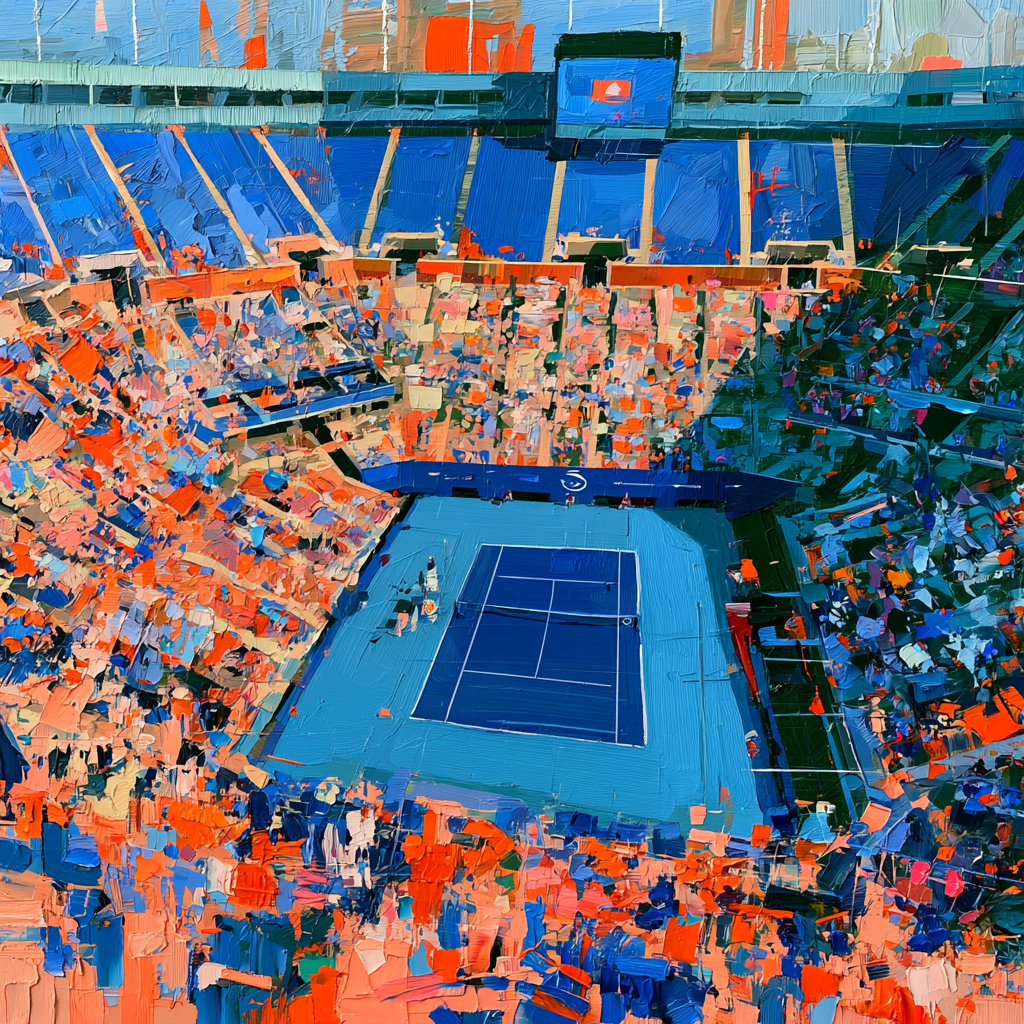
Alcaraz vs. Shelton: Power, Speed and a New York Quarterfinal Blockbuster
Shelton wants to turn the match into a sprint. Alcaraz wants enough time to turn it into a puzzle.
Carlos Alcaraz against Ben Shelton is the type of match the US Open was built to host.
It has power, speed, personality and the possibility of controlled chaos. It features the defending champion against one of America’s most exciting contenders. It places Alcaraz’s improvisational brilliance opposite Shelton’s left-handed force—and it will unfold inside a New York stadium eager to believe an American man can win a Grand Slam again.
Alcaraz enters the quarterfinal as the favorite. He leads their head-to-head series 3-0 and has won seven of the eight sets they have played. He also owns more ways to change a match when his original plan is not working.
But Shelton does not need to be the more complete player across an entire season. He only needs to create the right conditions for one afternoon in New York.
His challenge is not simply to serve hard. It is to make Alcaraz feel rushed.
If Shelton can control the first four shots, protect his service games without emotional drama and convince the crowd that an upset is possible, the match can become extremely dangerous for the defending champion.
If Alcaraz repeatedly extends rallies beyond those opening exchanges, forces Shelton to hit from uncomfortable positions and begins blending height, speed, angles and drop shots, the tactical advantage shifts decisively toward the Spaniard.
“Shelton wants the match to become a sprint. Alcaraz wants enough time to turn it into a puzzle.”
Two Different Kinds of Athleticism
Both players are spectacular athletes, but they express athleticism differently.
Shelton’s game is explosive. His serve launches upward and forward with tremendous force. His first step is aggressive, his forehand can penetrate the court, and he is comfortable turning defense into offense through one violent acceleration.
Alcaraz’s athleticism is more elastic.
He can sprint, stop, slide, recover and change direction while maintaining the balance required to produce a high-quality shot. He does not merely reach difficult balls. He often converts them into offensive possibilities.
That distinction matters.
Shelton wants athleticism to end the point. Alcaraz uses athleticism to keep expanding it.
If Shelton strikes a wide serve and receives a short return, he wants one decisive forehand. If Alcaraz reaches that forehand and sends back a deep neutralizing ball, the entire value of Shelton’s serve begins to decline.
The quarterfinal will therefore be determined partly by what happens after the spectacular shot. Can Shelton finish? Can Alcaraz recover? Can Shelton remain disciplined if the first attack comes back?
The Serve Is Shelton’s Entry Ticket
Shelton cannot win this match without an exceptional serving performance.
That does not mean he must hit an ace on every point. Against Alcaraz, location and disguise may matter more than chasing maximum speed.
The left-handed serve gives Shelton several natural patterns.
From the ad court, he can swing the ball wide and pull Alcaraz beyond the doubles alley. From the deuce court, he can slice toward the body or into Alcaraz’s backhand side. He can also flatten the serve up the center to prevent Alcaraz from leaning toward the expected angle.
The most important objective is not the ace total. It is the quality of Shelton’s next ball.
A great serve can still fail tactically if the server does not anticipate the return. Shelton should know which forehand is likely to follow each location before he begins the motion.
His clearest patterns include:
- Wide left-handed serve followed by a forehand into the open court.
- Body serve to restrict Alcaraz’s swing, followed by an inside-out forehand.
- Serve up the center to prevent Alcaraz from creating a sharp return angle.
- Occasional serve-and-volley plays to punish a deep return position.
- Heavy kick on the second serve to push Alcaraz above his preferred contact point.
Against Stefanos Tsitsipas, Shelton produced his most complete performance of the tournament, winning 6-2, 6-3, 6-4. He remained focused from beginning to end, combined raw pace with touch and prevented the match from becoming complicated. Reuters
The next test is substantially greater.
Alcaraz is one of the best instinctive returners in tennis. He can block a massive serve deep, step inside the baseline against a second serve or improvise when the ball enters his body. Shelton must avoid falling into predictable service patterns that Alcaraz can begin reading by the second set.
Shelton Cannot Live on the First Serve Alone
The first serve may attract the highlights, but the second serve could decide the match.
Shelton’s second delivery is powerful enough to remain an offensive shot, yet Alcaraz will look for opportunities to step forward and immediately take control. If Shelton becomes cautious, Alcaraz can attack. If Shelton overhits, double faults can give away the exact points he needs to protect.
The solution is committed variety.
Shelton should not automatically hit every second serve with maximum kick to the same location. He must change Alcaraz’s contact point and occasionally accept the risk of serving more aggressively.
Just as important, Shelton cannot allow a missed first serve to produce negative body language. Alcaraz reads emotional information quickly. If Shelton looks uncertain before the second serve, Alcaraz will move closer, become more aggressive and turn that uncertainty into pressure.
“The first serve can create the upset. The second serve must survive it.”
Alcaraz Will Attack the Middle Before Opening the Court
The obvious strategy against Shelton is to target the backhand.
That is useful, but incomplete.
Alcaraz may be even more interested in the center of the court.
Hitting through the middle can deny Shelton the angle and space he uses to generate forehand acceleration. It can also force the American to move away from the ball before creating his next attack.
Alcaraz can then open the geometry gradually:
- Establish depth through the center.
- Move Shelton toward the backhand corner.
- Change height with topspin.
- Pull him forward with a drop shot.
- Pass or lob after Shelton is forced into a rushed transition.
Alcaraz does not need to hit through Shelton immediately. He can make Shelton uncomfortable first.
That is one of the Spaniard’s greatest strengths. He understands that point construction is not merely about finding an opponent’s weaker stroke. It is about manipulating balance, court position and expectation until the weaker response appears.
The Backhand Exchange Is More Complicated Than It Looks
Shelton’s backhand is the wing Alcaraz will naturally test, but the American does not need to win every backhand exchange.
He needs to remain neutral long enough to protect the forehand.
If Shelton attempts to create too much pace from a difficult backhand position, errors will accumulate. A deep, heavy crosscourt backhand that prevents Alcaraz from attacking may be sufficient.
Shelton can also use the backhand down the line selectively. That shot carries risk, but it prevents Alcaraz from leaning too far toward the crosscourt pattern and running around his own backhand.
Slice may become another valuable change. A low ball can interrupt Alcaraz’s preferred rhythm, especially if the Spaniard begins standing farther behind the baseline to extend rallies.
The key is intentional variation. Shelton cannot vary simply because he is uncomfortable. Every change must serve a positional purpose.
Alcaraz’s Forehand Is Beginning to Look Dangerous Again
Alcaraz arrived in New York after approximately four and a half months away because of a wrist injury. The absence created legitimate questions about his timing, confidence and ability to withstand seven best-of-five-set matches.
Those questions have gradually weakened.
He defeated Tommy Paul 6-4, 6-3, 6-4 in the fourth round, raising his level at the most important moments and showing increasing confidence in his forehand and serve. Paul could not establish enough pressure to expose the lack of recent match play. The Guardian
Shelton must therefore test the wrist and forehand in a way Alcaraz’s previous opponents have not.
That does not mean repeatedly feeding pace into the strike zone. It means making Alcaraz defend the forehand on the stretch, contacting the ball late and above shoulder height, then forcing him to accelerate again on the next shot.
The question is not whether Alcaraz can hit one brilliant forehand.
It is whether Shelton can make him produce that speed and control repeatedly under physical pressure.
The Drop Shot Will Be a Psychological Weapon
Alcaraz’s drop shot is not merely a technical flourish. It changes how opponents position themselves.
Once Shelton begins anticipating the drop shot, he may creep forward. That opens deeper space behind him. If he remains too far back, Alcaraz can bring him forward on unfavorable terms.
Shelton is an excellent athlete and capable at the net, but approaching voluntarily is different from being summoned by Alcaraz.
When a player chooses to attack, he controls the movement. When Alcaraz uses the drop shot, he controls the opponent’s movement.
Shelton must distinguish between a genuinely effective drop shot and one he can attack. If he reaches the ball comfortably, he should commit to moving through it rather than simply lifting it back and allowing Alcaraz to pass.
Alcaraz will also use the possibility of the drop shot even when he does not hit it. A slight change in preparation can freeze Shelton’s recovery step and create space for the next deep ball.
Shelton Must Attack the Net—But on His Terms
Shortening points does not mean rushing to the net behind weak approaches.
Shelton should move forward when his serve or forehand has already placed Alcaraz in a defensive position. His first volley does not always need to be a winner. A firm volley into the open court or behind Alcaraz can force the Spaniard to produce one more difficult pass.
The danger is approaching predictably.
Alcaraz has exceptional hands, can pass from both wings and is comfortable creating sharp angles while moving. If Shelton attacks behind a shallow ball, Alcaraz can turn the approach into a target.
Shelton’s best net opportunities are likely to come after:
- A wide serve that pulls Alcaraz off the court.
- A heavy forehand into the backhand corner.
- A body serve that produces a short, floating return.
- A forehand struck behind Alcaraz’s recovery.
- An occasional surprise serve-and-volley.
He should think of the net as the final stage of a successful pattern, not an emergency exit from a rally.
The Return Position Could Change Everything
Watch where Alcaraz stands to return.
If he begins close to the baseline, he is trying to take time away and block the serve early. Shelton can respond with body serves and sharp wide angles.
If Alcaraz moves deeper, he is prioritizing reaction time and a full swing. That position may help him neutralize pace, but it creates opportunities for Shelton to serve-and-volley or use the next shot short in the court.
Shelton must recognize those adjustments immediately.
He should not continue using the same locations simply because they worked early. Each return position invites a different response.
Alcaraz will conduct his own experiment. He may begin deep, collect information about Shelton’s locations and gradually move forward once he recognizes the patterns. Shelton’s ability to disguise his toss and maintain similar body positions across different serves will be critical.
The First Four Shots Will Belong to Shelton
Shelton’s best chance exists inside the first four shots:
- His serve.
- Alcaraz’s return.
- Shelton’s first groundstroke.
- Alcaraz’s first defensive or neutralizing reply.
If Shelton controls that sequence, he can keep points short and protect his energy.
If Alcaraz survives it, the point begins shifting.
Longer rallies allow Alcaraz to explore Shelton’s movement, backhand tolerance and willingness to repeat difficult shots. They also let him introduce variation—high topspin, short angles, slices, drop shots and sudden changes of direction.
This does not mean Shelton should panic when a rally reaches five shots. It means his objective should be clear: control the opening without forcing an unrealistic winner.
The difference between good aggression and reckless aggression is often one extra ball.
“Shelton does not need every first forehand to be a winner. He needs it to ensure that the next shot still belongs to him.”
Alcaraz Must Avoid Feeding the Crowd
New York will support Shelton.
Alcaraz is popular everywhere, including the United States, but the possibility of an American men’s champion will change the emotional balance inside Arthur Ashe Stadium.
Shelton understands how to activate a crowd. A sequence of aces, a diving volley or a massive forehand can quickly transform one service game into a larger wave of belief.
Alcaraz’s task is to interrupt those waves before they become part of the match.
The most effective response is not confrontation. It is scoreboard control.
A quiet hold after Shelton produces a spectacular game can drain the emotional momentum. A deep return at 15-30 can suddenly make the crowd nervous. Forcing Shelton to hit another volley after the American believes the point is finished can introduce doubt.
Alcaraz has played in hostile and emotionally intense environments. But New York presents a particular challenge: the noise can shift quickly, and the crowd does not need a long reason to become involved.
Shelton’s job is to give it one.
Shelton’s Greatest Improvement Is Not His Serve
Shelton has always possessed power. The more meaningful improvement is how he organizes it.
Earlier in his career, he sometimes appeared to view spectacular tennis as proof that he was playing well. The biggest serve, hardest forehand or most athletic point could become an emotional event of its own.
Now he is becoming more capable of separating entertainment from execution.
Against Tsitsipas, Shelton remained engaged without becoming distracted by his own highlights. He recognized the score, protected his service games and maintained concentration after gaining control. After the match, he reportedly returned to the practice court because he wanted to clean up details he did not like.
That behavior matters.
Grand Slam champions are rarely satisfied because a performance looked impressive. They evaluate whether the patterns will work against the next opponent.
Shelton knows that the tennis that defeated Tsitsipas may not be enough against Alcaraz.
Alcaraz’s Greatest Advantage Is Problem-Solving
Alcaraz leads their rivalry 3-0, including a four-set victory at the 2025 French Open. Across those three meetings, Shelton has won only one set. ATP head-to-head
The numbers do not mean Shelton cannot win. They reveal the central difficulty.
Alcaraz is rarely defeated by one-dimensional pressure. Even when an opponent’s primary weapon works, he begins making adjustments:
- Changing his return depth.
- Altering the height of the rally.
- Serving more frequently into the body.
- Using the drop shot to disrupt court position.
- Taking the ball earlier to remove preparation time.
- Defending longer until the opponent presses.
- Moving forward before the opponent expects it.
Shelton must therefore prepare for multiple versions of the match.
Plan A may work for a set. Alcaraz will then ask a different question.
The upset depends on whether Shelton can answer without abandoning his identity.
Five Keys for Shelton
1. Protect the second serve
Alcaraz will attack hesitation. Shelton must vary location and remain committed to the motion.
2. Win the first-forehand battle
The serve is only valuable if the next shot maintains control. Shelton needs depth and direction more than reckless speed.
3. Make Alcaraz defend forward
Deep power alone allows Alcaraz to settle into his movement. Shelton should occasionally bring him forward with controlled short angles or surprise touch.
4. Stay patient on neutral backhands
He does not need to win from the backhand immediately. He needs to avoid donating errors.
5. Use the crowd without playing for it
The audience should provide energy between points, not determine shot selection during them.
Five Keys for Alcaraz
1. Neutralize the opening four shots
Deep returns and disciplined defense will force Shelton to play outside his preferred sprint.
2. Attack the body
Body serves and central groundstrokes can reduce Shelton’s ability to create full acceleration.
3. Change the rally height
Heavy topspin can move the contact point away from Shelton’s ideal strike zone.
4. Test the American’s patience
Alcaraz should resist chasing unnecessary early winners. The longer Shelton must repeat his patterns, the more likely his risk level rises.
5. Silence momentum immediately
After a spectacular Shelton game, Alcaraz needs a composed hold or a deep opening return—not an emotional response.
What Happens if Shelton Wins the First Set?
The first set matters more for Shelton than for Alcaraz.
Winning it would confirm to the crowd that the upset is real. It would allow Shelton to serve more freely and place Alcaraz in the unfamiliar position of chasing after a long injury absence.
But Shelton must not treat the first set as the finish line.
Alcaraz has won countless matches by gathering information early and reorganizing later. If Shelton celebrates emotionally, relaxes his court position or begins protecting the lead, Alcaraz will take control.
Shelton’s best response to winning the first set would be tactical continuity with emotional restraint.
The message should be: that was not the surprise; that was the plan.
What Happens if Alcaraz Wins the First Set?
If Alcaraz wins the first set comfortably, Shelton’s discipline will face its strongest test.
The American cannot respond by serving harder, swinging earlier and attempting to erase the deficit in a single game. That is exactly the type of emotional acceleration Alcaraz can exploit.
Shelton must continue holding serve, force the next set toward pressure and trust that one exceptional return game can alter the match.
A tiebreak would be valuable because it compresses Alcaraz’s broader tactical advantage into a small number of points. Shelton’s serve becomes more influential, and the crowd becomes louder.
The longer Shelton remains close on the scoreboard, the more Alcaraz must think about the consequences of a few points.
Prediction: Alcaraz in Four—With Real Danger
Alcaraz should win.
He leads the rivalry 3-0, has more return options, moves better in extended exchanges and can change the style of the match more effectively. His improving form in New York suggests the wrist is no longer limiting the forehand in an obvious way.
But a routine prediction would underestimate Shelton.
The American is serving well, moving better and making more mature decisions. He also enters with the crowd, the confidence of a dominant fourth-round victory and a clear tactical route to the upset.
Shelton’s best chance is to win the opening set, keep his service games short and force at least one additional set into a tiebreak. If he can make Alcaraz feel that every return game may be his only opportunity, pressure will begin moving toward the favorite.
If the match becomes physical, varied and filled with long rallies, Alcaraz should gradually separate.
Prediction: Alcaraz in four competitive sets.
But the score may not capture the danger. Shelton possesses the rare kind of power that can compress a three-hour match into a handful of decisive returns, second serves and forehands.
That is why this quarterfinal is so compelling.
Alcaraz is the better problem-solver. Shelton may be the biggest immediate problem left in his path.
“Alcaraz owns more answers. Shelton’s chance is to ask the questions so quickly that there is no time to use them.”
Tags: Alcaraz vs Shelton, american tennis, Arthur Ashe Stadium, ben shelton, Carlos Alcaraz, grand slam tennis, left-handed serve, match analysis, tennis strategy, US Open quarterfinal